Steven Cromack
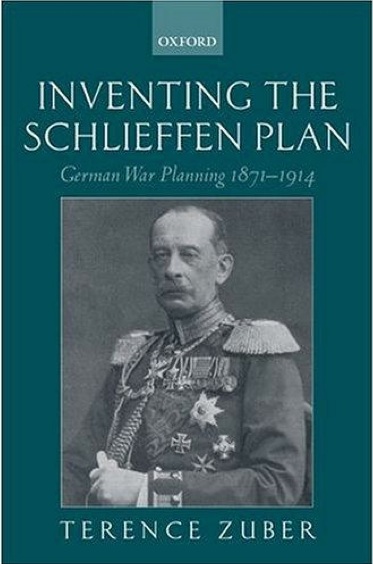
In a 1999 journal article published in War in History, historian Terence Zuber dropped a bombshell on the academic community. He argued that the Schlieffen Plan, or the German attack plan during World War I, was a post-war construction written by the generals to justify why the Germans lost the war. He based his argument strictly on not only the primary sources that have been around since the War, but also new sources that became available with the fall of the Berlin Wall. Zuber’s individual pieces of evidence are circumstantial. Take all of it into consideration, however, and he makes a compelling case. A few years later, he published a book on the topic with Oxford University Press (Inventing the Schlieffen Plan: German War Planning, 1871-1914).
 “The Schlieffen Plan” was the so-called German attack plan supposedly articulated by Count Alfred von Schlieffen, Chief of the German General Staff. It was Germany’s roadmap to war—if all went according to “the Plan,” Germany would deliberately start World War I on their terms in 1916. It called for rapid building of railroads across the country from West to East. The attack would consist of the right wing invading Belgium and swing wide around Paris, striking the city from the West. The left flank would remain stationary at Lorraine and hold off the likely French counterattack. In the eyes of Schlieffen, France would surrender before they let anything happen to Paris. Then, with France out of the war, the German army would utilize their new railroads, move its troops across the country to Eastern front, and knock out Russia. As history “happened,” when entangling alliances ignited the so-called “powder keg,” and launched the War earlier than the Germans had hoped, the Schlieffen plan fell apart. Schlieffen died, and his successor, Ludwig von Moltke not only inherited the Plan, but also altered it, or failed to understand it. Von Moltke moved troops away from the West to bolster the Russian front. “And the rest,” they say, “is history.”
Zuber challenged that history. He wrote that there never was mention of a “Schlieffen Plan” before 1920. Instead, he argued that when one historian wrote that Germany employed the wrong strategy, the generals and other members of the General staff, Kuhl, Ludendorff, Foerster and Groener, countered with the myth that Schlieffen had conveyed his master plan to Moltke, but that Moltke failed to understand it. One should note that historians base their histories of the war on Ludendorff and others’ accounts.
 According to Zuber, Schlieffen did have some contingency plans, although they remained in his possession until he died, and were not locked in the vault with the rest of the German war plans. Zuber insisted that on its own, the Plan, or Denkschrift was a nightmare, poorly organized, and called for troop numbers that never existed. Schlieffen’s war games, as evident in his writings and handwritten diagrams, did not resemble the master plan, or anything close to it. Zuber based this argument on the newly discovered German staff memorandum, prepared by Major Wilhelm Dieckmann. Dieckmann was a German officer whose task was to write a history of the war, and he therefore had access to many of Schlieffen’s notes, and war plans before Allied bombings during World War II destroyed them. According to Zuber, Dieckmann’s manuscript revealed that Schlieffen’s “Plan” intended to keep the East strong and hold off the French by defeating their fortification line. Schlieffen never envisioned swinging wide around the Paris and defeating the French army. If this is true, then the Schlieffen Plan, as we know it, is wrong.
Zuber’s article and subsequent publications provoked a fifteen-year debate in War in History, especially between himself and historian Terence Holmes of Swansea University. The debate over whether there was or whether there was not a Schlieffen Plan continues to this day. The debate, however, has not reached high school history textbooks, or even undergraduate classes on European history. It seems that historians are having trouble grappling with Zuber’s uncomfortable argument. Why would they not? He only insists that the academy has gotten World War I wrong for the last hundred years. Such an assertion changes the interpretation and sequence of events. Zuber writes that he seeks “establish German military history according to the standard of Leopold von Ranke: ‘as it actually was.’” He, therefore, concluded his article, “There never was a ‘Schlieffen Plan.’”
For those interested in the heated debate in War in History thus far, here is the “Roundup” from Zuber’s website (http://www.terencezuber.com/):
In a 1999 journal article published in War in History, historian Terence Zuber dropped a bombshell on the academic community. He argued that the Schlieffen Plan, or the German attack plan during World War I, was a post-war construction written by the generals to justify why the Germans lost the war. He based his argument strictly on not only the primary sources that have been around since the War, but also new sources that became available with the fall of the Berlin Wall. Zuber’s individual pieces of evidence are circumstantial. Take all of it into consideration, however, and he makes a compelling case. A few years later, he published a book on the topic with Oxford University Press (Inventing the Schlieffen Plan: German War Planning, 1871-1914).
 “The Schlieffen Plan” was the so-called German attack plan supposedly articulated by Count Alfred von Schlieffen, Chief of the German General Staff. It was Germany’s roadmap to war—if all went according to “the Plan,” Germany would deliberately start World War I on their terms in 1916. It called for rapid building of railroads across the country from West to East. The attack would consist of the right wing invading Belgium and swing wide around Paris, striking the city from the West. The left flank would remain stationary at Lorraine and hold off the likely French counterattack. In the eyes of Schlieffen, France would surrender before they let anything happen to Paris. Then, with France out of the war, the German army would utilize their new railroads, move its troops across the country to Eastern front, and knock out Russia. As history “happened,” when entangling alliances ignited the so-called “powder keg,” and launched the War earlier than the Germans had hoped, the Schlieffen plan fell apart. Schlieffen died, and his successor, Ludwig von Moltke not only inherited the Plan, but also altered it, or failed to understand it. Von Moltke moved troops away from the West to bolster the Russian front. “And the rest,” they say, “is history.”
Zuber challenged that history. He wrote that there never was mention of a “Schlieffen Plan” before 1920. Instead, he argued that when one historian wrote that Germany employed the wrong strategy, the generals and other members of the General staff, Kuhl, Ludendorff, Foerster and Groener, countered with the myth that Schlieffen had conveyed his master plan to Moltke, but that Moltke failed to understand it. One should note that historians base their histories of the war on Ludendorff and others’ accounts.

Zuber’s article and subsequent publications provoked a fifteen-year debate in War in History, especially between himself and historian Terence Holmes of Swansea University. The debate over whether there was or whether there was not a Schlieffen Plan continues to this day. The debate, however, has not reached high school history textbooks, or even undergraduate classes on European history. It seems that historians are having trouble grappling with Zuber’s uncomfortable argument. Why would they not? He only insists that the academy has gotten World War I wrong for the last hundred years. Such an assertion changes the interpretation and sequence of events. Zuber writes that he seeks “establish German military history according to the standard of Leopold von Ranke: ‘as it actually was.’” He, therefore, concluded his article, “There never was a ‘Schlieffen Plan.’”
For those interested in the heated debate in War in History thus far, here is the “Roundup” from Zuber’s website (http://www.terencezuber.com/):
T. Zuber, 'The Schlieffen Plan Reconsidered' in: War in History, 1999; 3: pp. 262-
305.
T. Holmes, 'A Reluctant March on Paris', in: War in History, 2001; 2: pp. 208-32.
T. Zuber, 'Terence Holmes Reinvents the Schlieffen Plan' in: War in History 2001; 4,
pp. 468-76.
T. Holmes, 'The Real Thing' in: War in History, 2002, 1, pp. 111-20.
T. Zuber, 'Terence Holmes Reinvents the Schlieffen Plan - Again' in: War in History
2003; 1, pp. 92-101.
R. Foley, 'The Origins of the Schlieffen Plan' in: War in History, 2003; 2 pp. 222-32.
T. Holmes, 'Asking Schlieffen: A Further Reply to Terence Zuber' in: War in History
2003; 4, pp. 464-479.
T. Zuber, 'The Schlieffen Plan was an Orphan' in: War in History, 2004; 2 pp. 220-25.
R. Foley, ‘The Real Schlieffen Plan’ in: War in History, 2006; 1, pp. 91-115.
T. Zuber, ‘The ‘Schlieffen Plan’ and German War Guilt’ in: War in History, 2007; 1,
pp. 96-108.
A. Mombauer, ‘Of War Plans and War Guilt: The Debate Surrounding the Schlieffen
Plan’ in: Journal of Strategic Studies XXVIII, 2005.
T. Zuber, ‘Everybody Knows There Was a ‘Schlieffen Plan”: A Reply to Annika
Mombauer’ in War in History, 2008; 1. pp. 92-101.
G. Gross, ‘There Was a Schlieffen Plan: New Sources on the History of German War
Planning’ in: War in History, 2008; 4, pp. 389-431.
T. Zuber, ‘There Never was a “Schlieffen Plan” (in preparation)
T. Holmes, ‘All Present and Correct: The Verifiable Army of the Schlieffen Plan’, in:
War in History, 2009, 16 (1) 98-115.
T. Zuber, ‘The Schlieffen Plan’s “Ghost Divisions” March Again: A Reply to Terence
Holmes’ (in preparation)


