.
Wesley Stace, "David Bowie, magpie and chameleon," TLS, May 25, 2011
Paul Trynka’s Starman pinpoints the moment when David Bowie made his mark: his performance on Top of the Pops in July 1972. (It also has the best title of a species that has always been extra-terrestrial – Loving the Alien, Moonage Daydream, Stardust, Hallo Spaceboy). As Bowie, playing a blue guitar, skin like china, hair bright carrot, draped his hand over his guitarist Mick Ronson’s gold lamé shoulder, he seemed on the point of kissing him.>>>
Liesl Bradner, "'Linda McCartney: Life in Photographs' reveals intimate family moments," LA Times, May 31, 2011
Before Linda McCartney ever laid eyes on her husband-to-be at the launch party for the album "Sgt. Pepper's Lonely Hearts Club Band" in 1967, she was already a reputable rock 'n' roll photographer capturing candid behind-the-scenes images of late '60s artists such as the Rolling Stones, Jimi Hendrix, the Doors and Janis Joplin.>>>
Jesse Sheidlower, "Noah Webster, Founding Father," NYT, May 27, 2011
Even if he had never written his famous dictionary, Noah Webster (1758-1843) would be regarded as one of the most interesting and influential figures of the early days of the American republic. His phenomenally popular “American Spelling Book,” first published in 1783, outsold every book in the 19th century except the Bible. His relentless book promotion pioneered now common techniques like the author tour, the fabricated blurb and the aggressive stoking of manufactured controversy.>>>
Russell Baker, "The Charms of Eleanor," NYRB, June 9, 2011
In 1918, during the fourteenth year of their marriage, Eleanor Roosevelt, age thirty-three, discovered that Franklin, age thirty-six, was in love with her young social secretary, Lucy Mercer. Long afterward, Eleanor told her friend Joseph Lash that the discovery was devastating, that the bottom seemed to have dropped out of her life. Yet as her subsequent history persuasively testifies, it was also her liberating moment, a life-changing event that opened a world of glorious possibilities for a woman not too timid to explore them.>>>
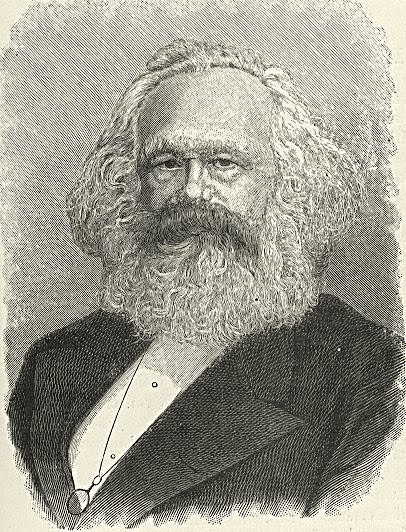
Tristram Hunt, "Why Marx Was Right by Terry Eagleton," Guardian, May 29, 2011
As the IMF dishes out its medicine in Lisbon, Dublin and Athens, and the limitations of neo-liberalism become more apparent, the moment is surely right for a compelling account of Karl Marx's relevance to the modern world. And in campus conferences, continuing sales of Das Kapital, and even the words of Pope Benedict XVI (moved to praise Marx's "great analytical skill"), there is a growing appreciation for Marx's predictions of globalisation, rampant capitalism, and the instability of international finance. As the Times put in the middle of the 2008 crash: "He's back!">>>
Wesley Stace, "David Bowie, magpie and chameleon," TLS, May 25, 2011
Paul Trynka’s Starman pinpoints the moment when David Bowie made his mark: his performance on Top of the Pops in July 1972. (It also has the best
 title of a species that has always been extra-terrestrial – Loving the Alien, Moonage Daydream, Stardust, Hallo Spaceboy). As Bowie, playing a blue guitar, skin like china, hair bright carrot, draped his hand over his guitarist Mick Ronson’s gold lamé shoulder, he seemed on the point of kissing him.>>>
Liesl Bradner, "'Linda McCartney: Life in Photographs' reveals intimate family moments," LA Times, May 31, 2011
Before Linda McCartney ever laid eyes on her husband-to-be at the launch party for the album "Sgt. Pepper's Lonely Hearts Club Band" in 1967, she was already a reputable rock 'n' roll photographer capturing candid behind-the-scenes images of late '60s artists such as the Rolling Stones, Jimi Hendrix, the Doors and Janis Joplin.>>>
Jesse Sheidlower, "Noah Webster, Founding Father," NYT, May 27, 2011
Even if he had never written his famous dictionary, Noah Webster (1758-1843) would be regarded as one of the most interesting and influential figures of the early days of the American republic. His phenomenally popular “American Spelling Book,” first published in 1783, outsold
 every book in the 19th century except the Bible. His relentless book promotion pioneered now common techniques like the author tour, the fabricated blurb and the aggressive stoking of manufactured controversy.>>>
Russell Baker, "The Charms of Eleanor," NYRB, June 9, 2011
In 1918, during the fourteenth year of their marriage, Eleanor Roosevelt, age thirty-three, discovered that Franklin, age thirty-six, was in love with her young social secretary, Lucy Mercer. Long afterward, Eleanor told her friend Joseph Lash that the discovery was devastating, that the bottom seemed to have dropped out of her life. Yet as her subsequent history persuasively testifies, it was also her liberating moment, a life-changing event that opened a world of glorious possibilities for a woman not too timid to explore them.>>>
Tristram Hunt, "Why Marx Was Right by Terry Eagleton," Guardian, May 29, 2011
As the IMF dishes out its medicine in Lisbon, Dublin and Athens, and the limitations of neo-liberalism become more apparent, the moment is surely right for a compelling account of Karl Marx's relevance to the modern world. And in campus conferences, continuing sales of Das Kapital, and even the words of Pope Benedict XVI (moved to praise Marx's "great analytical skill"), there is a growing appreciation for Marx's predictions of globalisation, rampant capitalism, and the instability of international finance. As the Times put in the middle of the 2008 crash: "He's back!">>>